
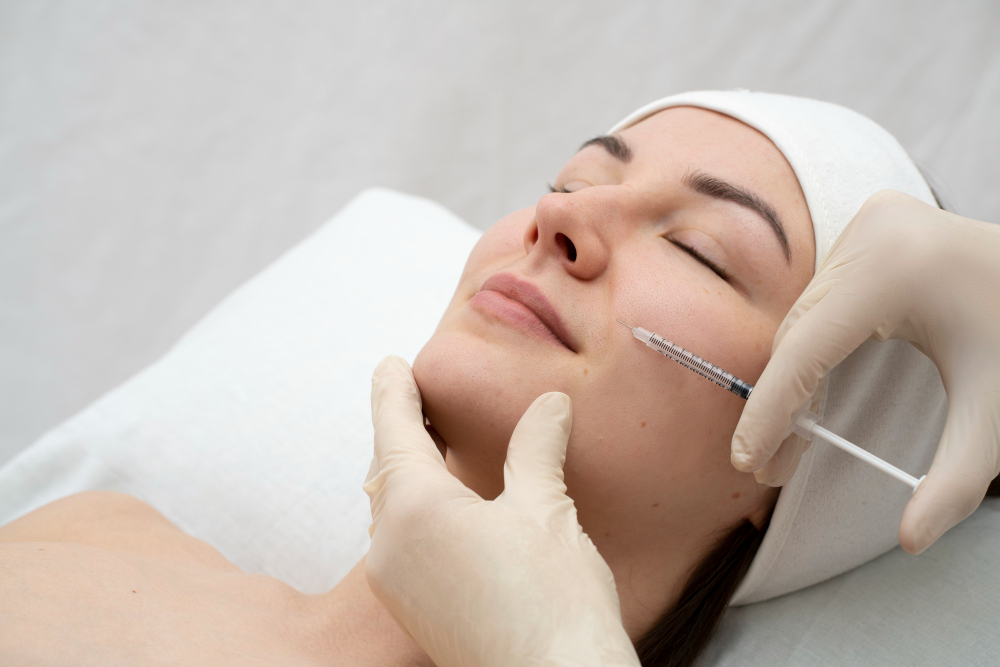

Discover how botulinum toxin compares to facial HIFU for treating wrinkles and expression lines with a medical and personalized approach.
Botulinum toxin and facial HIFU are two of the most consulted treatments in aesthetic medicine when the goal is to reduce wrinkles and expression lines without surgery. Although both aim to rejuvenate the face and improve skin appearance, they work differently, have distinct indications, and offer results with varying times and durations. Understanding these differences is key to choosing the most suitable option based on your wrinkle type, age, and expectations. At Medicina Estética Benavides la recomendación siempre parte de una valoración médica personalizada, no de una elección genérica.
Botulinum toxin works by modulating the contraction of certain facial muscles responsible for dynamic wrinkles—those that appear with expression, such as forehead lines, frown lines, and crow's feet. By relaxing these muscles in a controlled manner, the overlying skin appears smoother and more rested. At Medicina Estética Benavides, English botulinum toxin Dysport is used, recognized for its safety profile and natural results when applied by an experienced physician. Effects typically begin to show within a few days and peak around two weeks.
Facial HIFU, on the other hand, uses high-intensity focused ultrasound to stimulate collagen production in deep skin layers. Unlike botulinum toxin, HIFU does not act on muscles or block movement; instead, it addresses sagging and skin quality. It is a treatment primarily designed for mild to moderate wrinkles and expression lines associated with loss of firmness, as well as for improving facial contours. HIFU results are progressive and may take several months to fully manifest, but they typically last a year or more, depending on the patient.
When comparing both treatments, it is not about deciding which is "better" in absolute terms, but which is more suitable for each case. Botulinum toxin is often the best option for moderate to marked dynamic wrinkles, especially in patients seeking visible results quickly. Its average duration is six to nine months, after which a new application may be needed to maintain the effect. After treatment, it is recommended to avoid vigorous exercise and other facial procedures for a brief period, always following medical advice.
Facial HIFU, in contrast, is more suitable for people with mild to moderate sagging who seek a non-invasive treatment, without injections and without altering facial expression. It does not offer an immediate effect on deep expression wrinkles, but it does contribute to firmer skin and a gradually rejuvenated appearance. In many cases, both treatments are not mutually exclusive but complementary, and can be part of a comprehensive facial rejuvenation plan designed by the physician.
The choice between botulinum toxin, facial HIFU, or a combination of both depends on factors such as age, wrinkle type, degree of sagging, facial anatomy, and personal goals. Therefore, medical assessment is essential. Dr. María Fernanda Benavides analiza tu rostro de forma integral y te orienta con honestidad sobre qué tratamiento puede ofrecerte los mejores resultados, siempre priorizando la naturalidad y la seguridad.
If you are considering a treatment to reduce wrinkles and expression lines and want to know whether botulinum toxin, facial HIFU, or both are right for you, the ideal step is to schedule an initial consultation. You can request more information or book your appointment by writing directly via WhatsApp, where the clinic team will provide clear and personalized guidance.
Frequently asked questions about botulinum toxin and facial HIFU:
-
Does botulinum toxin change facial expression?
No, when applied correctly, it aims to relax the muscle without losing naturalness or expressiveness. -
How long do botulinum toxin results last?
Generally between six and nine months, depending on the patient's metabolism and habits. -
Does facial HIFU replace botulinum toxin?
Not necessarily. HIFU treats sagging and skin quality, while botulinum toxin acts on expression wrinkles. -
Can both treatments be combined?
Yes, in many cases they are combined within a personalized facial rejuvenation plan. -